
February 26, 2026 | 6 pm
Excavations (72 min, 2012-2022)
With works by Kevin Jerome Everson, Allison Cekala, Maeve Brennan , and Yto Barrada
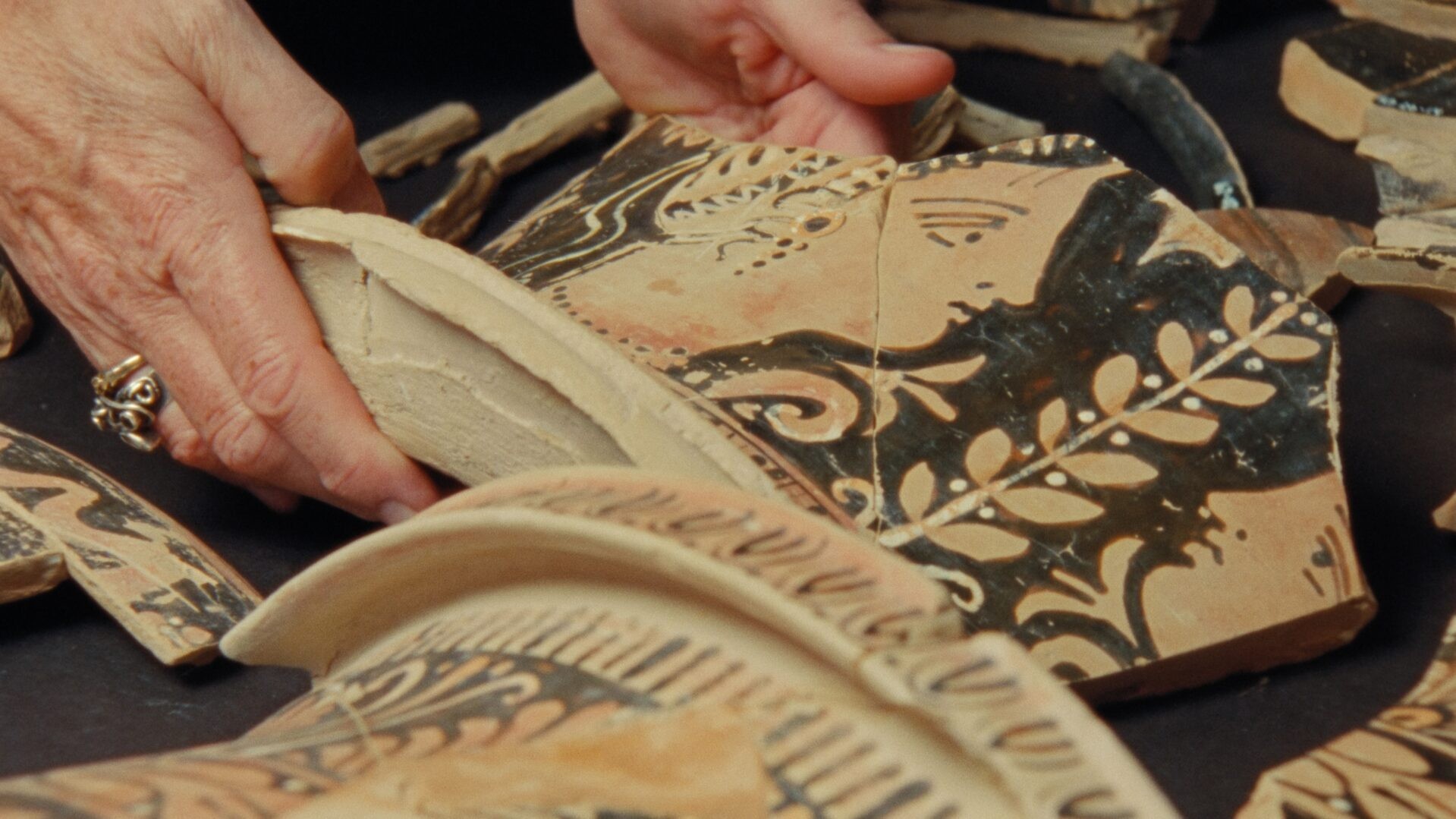
(2022, UK, 20 min, 16mm to digital file) Maeve Brennan
This program is focused on the lifecycle of the object in contrasting milieus, exposed to natural, cultural, and economic conditions of transformation. Instances of destruction, extraction, excavation, and fabrication all factor nominally in these portraits, but each reveals a broader context of causality. The minutiae of art and labor is framed against the vast horizon of human endeavor.
Century (2012, US, 7 min, 16mm) Kevin Jerome Everson
Century consists of a General Motors automobile – a Buick Century – meeting its fate. It was filmed in Charlottesville, Virginia, in 16mm in November, 2011.
Fundir (2016, US, 22 min, digital file) Allison Cekala
Fundir (“to melt”) is a biography of a material, a record of extraction, migration, and physical transformation initiated by vast and intricate choreography of human labor and global trade. Fundir follows the processing and importation of Boston’s road salt from one of its main sources in the Atacama Desert of northern Chile.
Though salt has a cycle outside of human time, Fundir begins its story in the anthropocene, documenting a small window into salt history millions of years after the salt formed from a prehistoric salt lake. In the film, salt serves a human use through miraculously melting ice into water, providing safety for winter road travelers in Boston as well as a livelihood for the hundreds of laborers that mine, truck, ship, and eventually spread the 99.5% pure rock salt over the roads of Boston. It is there that it slips back out of human hands, flowing into the Atlantic Ocean.
An Excavation (2022, UK, 20 min, 16mm to digital file) Maeve Brennan
In 2014, 45 crates of looted antiquities were discovered at Geneva Freeport in a warehouse belonging to disgraced antiquities dealer Robin Symes. They contained tens of thousands of archaeological remnants worth around £7 million. Three of the crates were sent to forensic archaeologists Dr Christos Tsirogiannis and Dr Vinnie Norskov for research.
An Excavation documents Tsirogiannis and Norskov’s investigation into a series of vases from the Geneva Freeport crates. Made in the 4th century BC by Apulian artisans, these vases remained buried in tombs for 2500 years before they were clandestinely excavated from their now irrecoverable contexts. The objects’ journeys through the hands of looters, smugglers, restorers and dealers are counterpointed by the hand-painted stories that adorn them. Made for burials, the vases depict scenes from the underworld – forensic and mythological narratives start to intertwine.
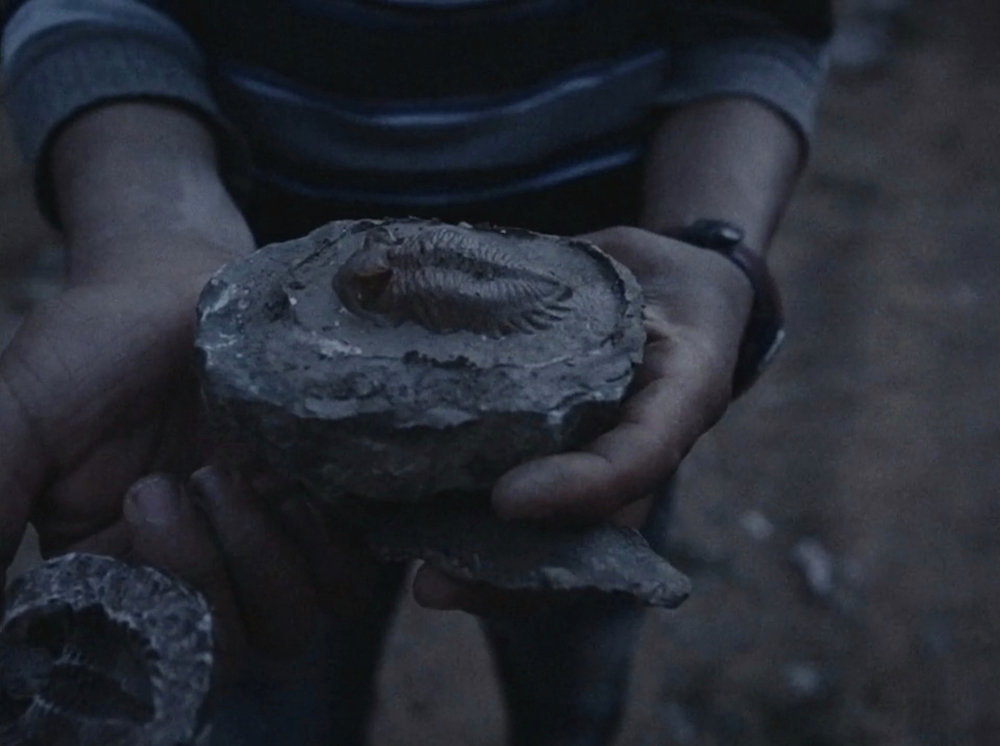
Faux départ (False Start) (2015, Morocco, 23 min, 16mm/HD) Yto Barrada
Faux départ (False Start) takes viewers on a journey through the parallel economy of paleontological excavation sites and “dinosaur tourism” between the Atlas mountains and the Sahara desert, once an inland sea. The “preparators” who unearth, work up—and sometimes counterfeit—fossil evidence demonstrate remarkable skill and knowledge as they prepare ancient pieces for sale or author beautiful hand-molded fake-fossil souvenirs. – Bettina Spörr
Elements: Material and Process in the Moving Image is a six-part film series, presenting twenty-five works from contemporary artists, and conceived in dialogue with the exhibition HAUNTED.
Curated by David Dinnell and Jay Kuehner
Focusing on matter that spans both natural and artificial realms – and its transformation through manual, mechanical, and organic processes – the works in this series undertake an accounting of the lived world. Taken in context with the TAM exhibition HAUNTED, these selected works collectively consider how the experiential is framed through empirical and intuitive means, with moving images acting as witness, catalyst, surrogate, and archive.
Manifest in extractive and generative forms, destructive and productive acts, durable to ephemeral ends, the processual – as cinematic event – reveals latent histories in granular form but of ever-increasing consequence. Featuring 25 works that scale from deeply personal to broadly historical, from geologic to anthropogenic; fusing the merely observational to the sheerly operational image.